
Step 1: Configure AI Model (Required)
Before proceeding with the setup, configuring an AI model is mandatory. Enter Pipeshub stays disabled until this step is saved.- Select the AI provider.
- Provide the fields the provider asks for (for example the API key and the model name).
- Save the model, then click Next.
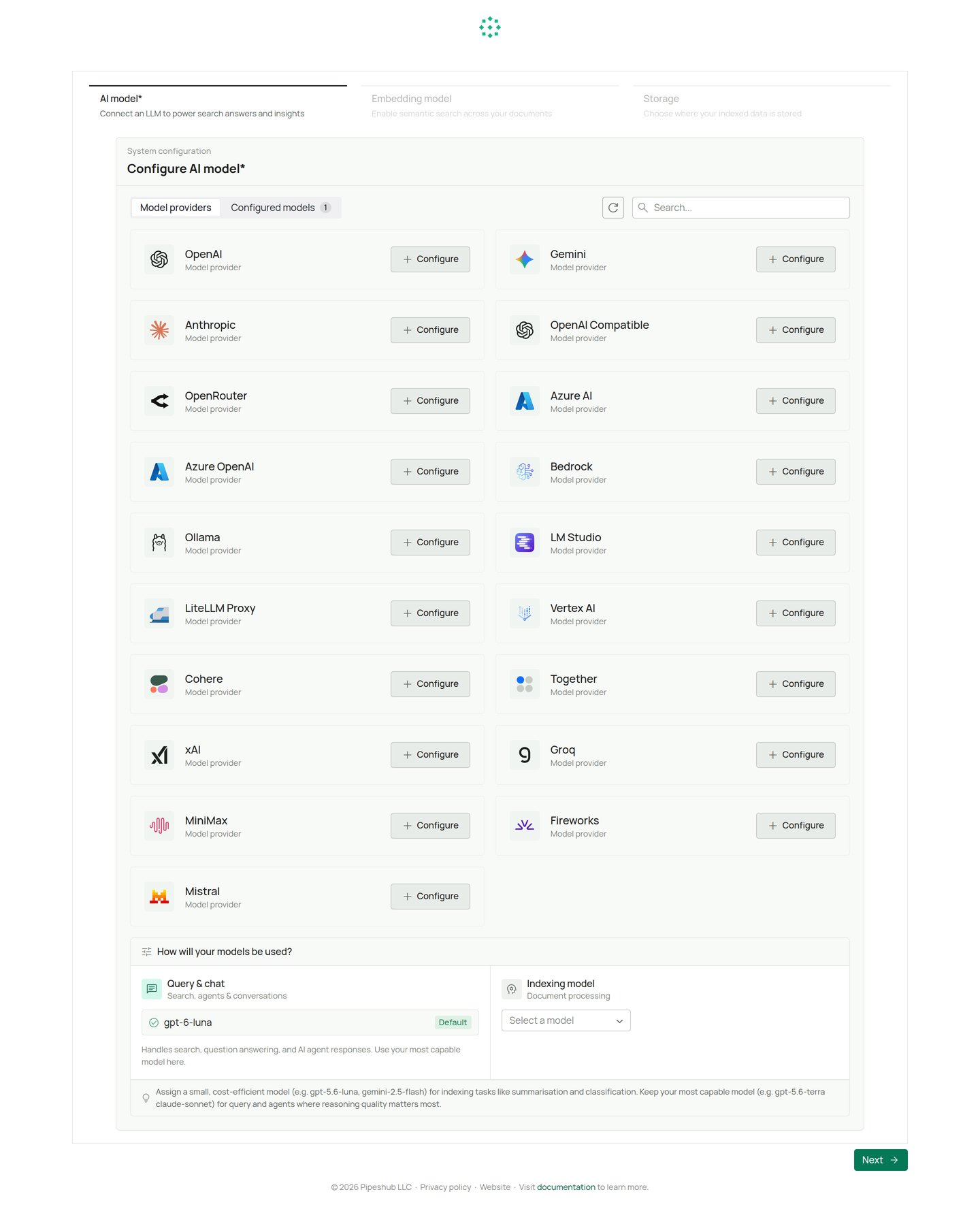
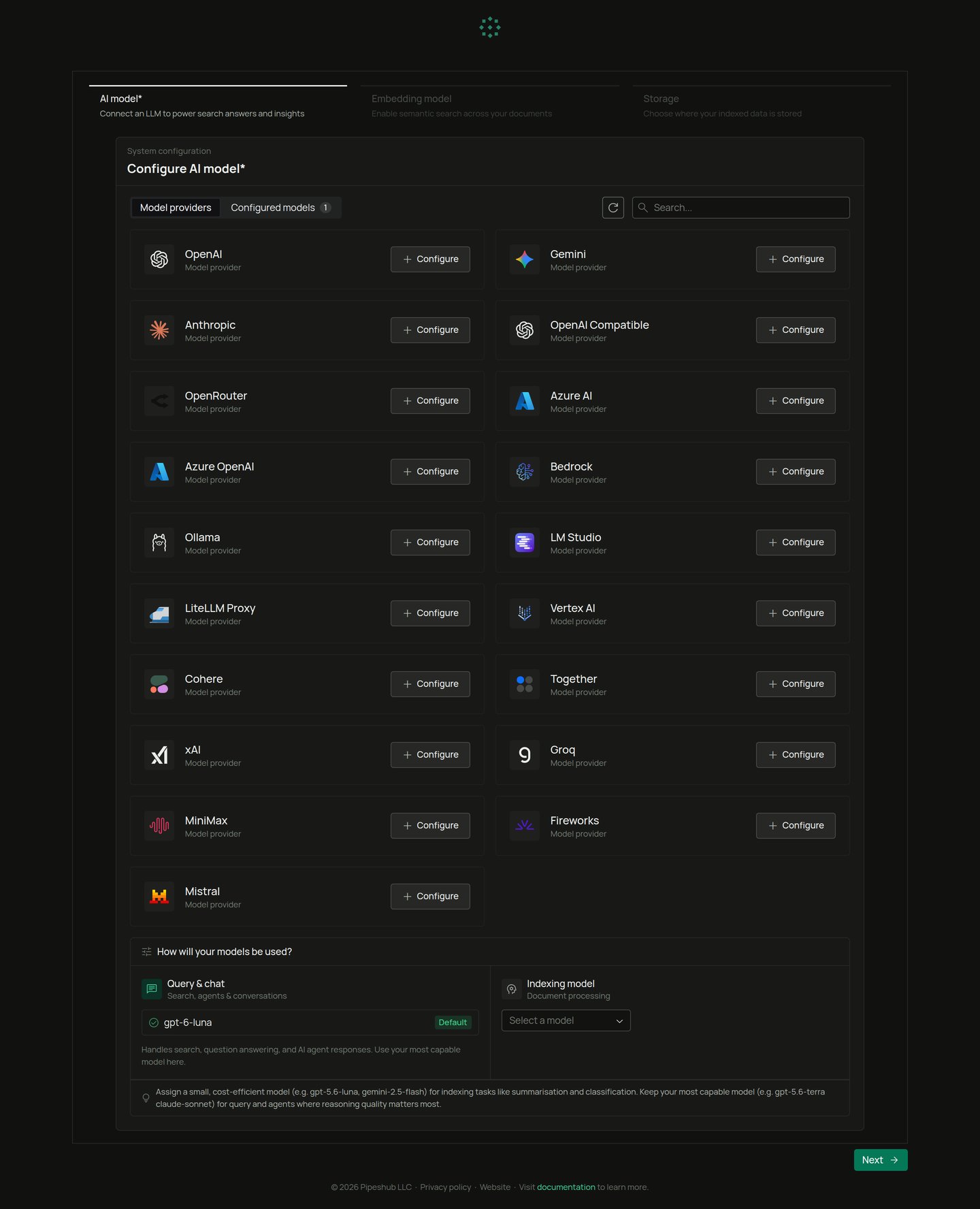
For more info, refer to AI models Configuration Guide.
AI model configuration is required to enable AI-powered features.
Step 2: Configure Embeddings Model (Required)
The Embeddings Configuration section is part of the System Setup workflow for enabling semantic search and document retrieval features in your application. This configuration step allows you to define the embedding provider and specify the model used for generating vector representations of textual content.- Select the embedding provider.
- Provide the fields the provider asks for (for example the endpoint, API key and model name).
- Save the model, then click Next.
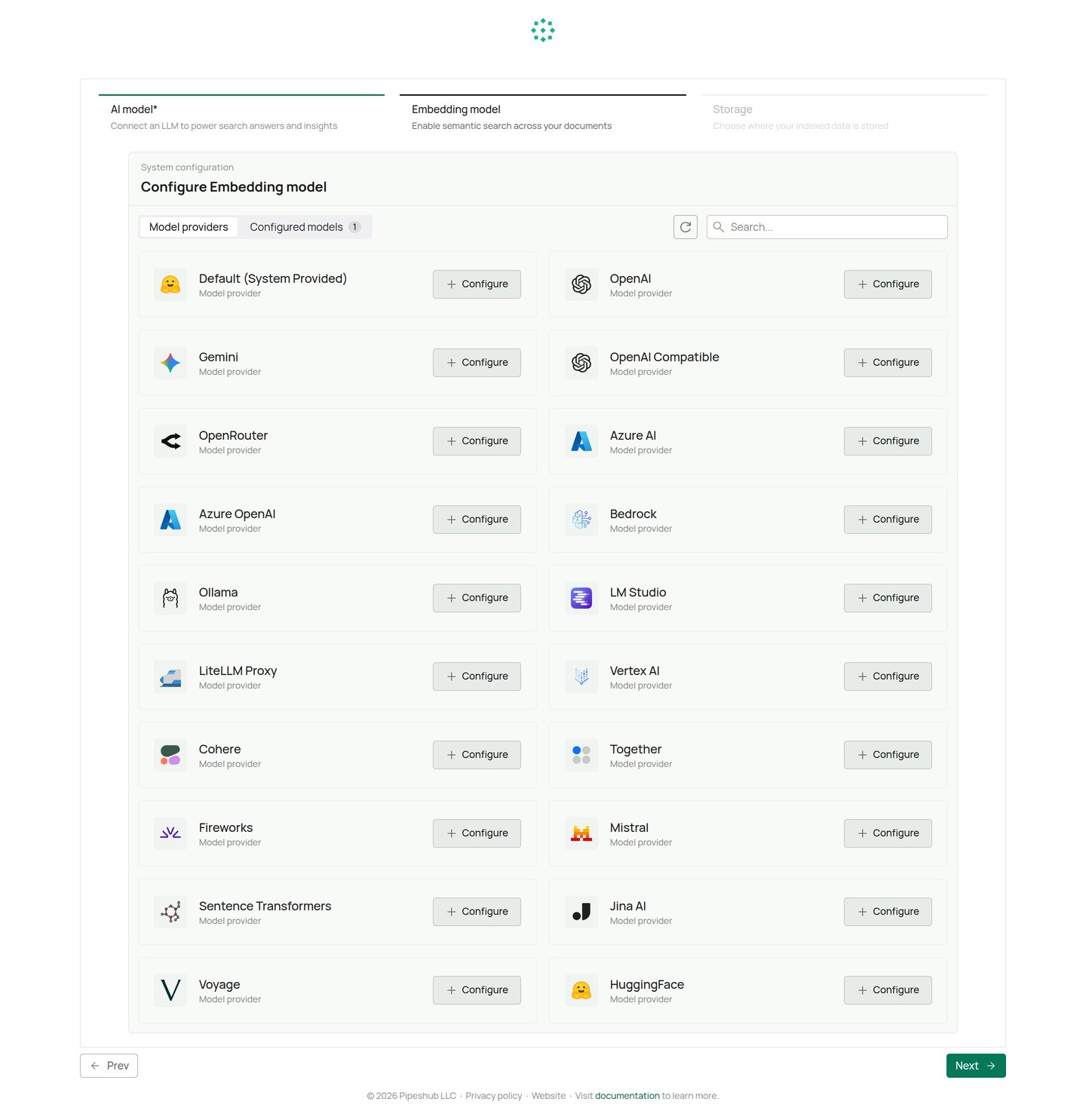
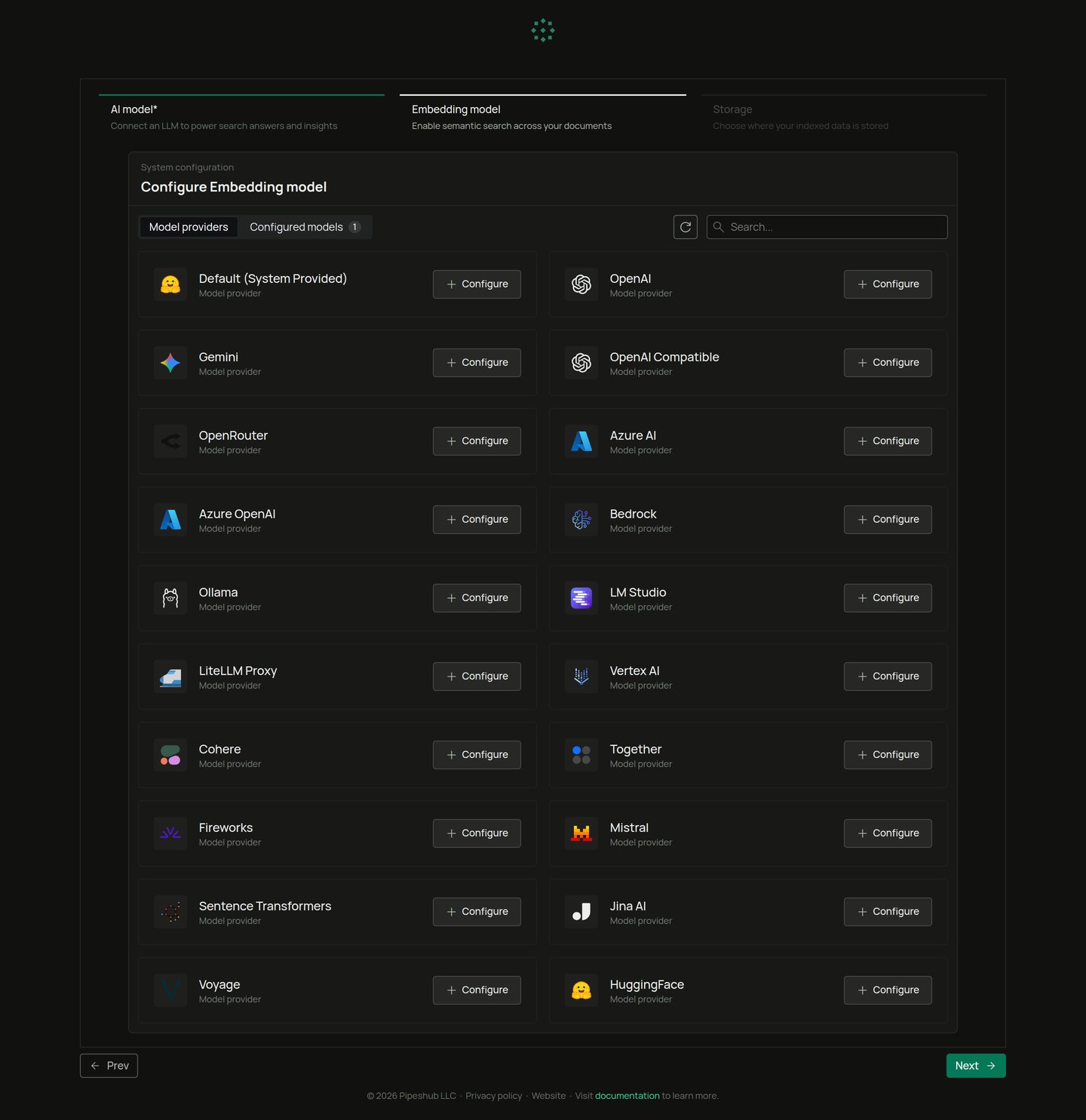
Next stays disabled until an embedding model is saved. If your deployment offers a system-provided default, Skip opens its setup; press Add model there to save it. You can change the embedding model later in workspace settings.
Step 3: Configure Storage (Optional)
Setting up storage allows the system to save and retrieve data efficiently. By default, local storage (local machine) will be used to store the files.- Under Provider type, choose Local (system default) or Amazon S3.
- Enter the corresponding configuration.
- Mount name and Base URL (both optional) for Local (system default).
- Bucket and Region, plus an optional Access key and Secret key, for Amazon S3. Leave both keys blank to use the server’s IAM role.
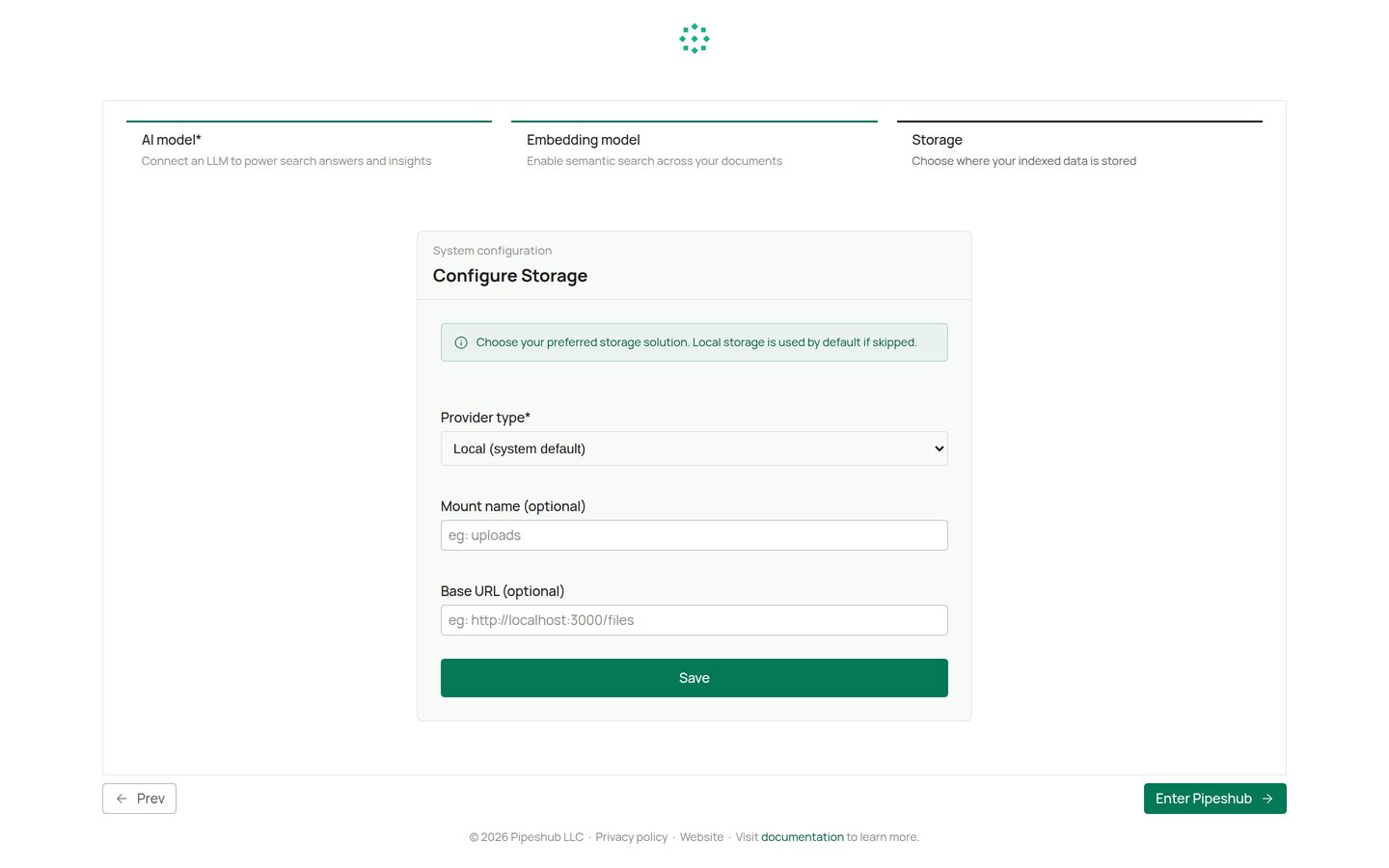
For more info, refer to Storage Service documentation.
You can skip this step. By default Local storage will be chosen.
After onboarding
Click Enter Pipeshub to finish. Then, in Workspace settings:- Set up email (SMTP) under Workspace > Mail. See the SMTP guide.
- Add connectors under Connectors. See Connectors.