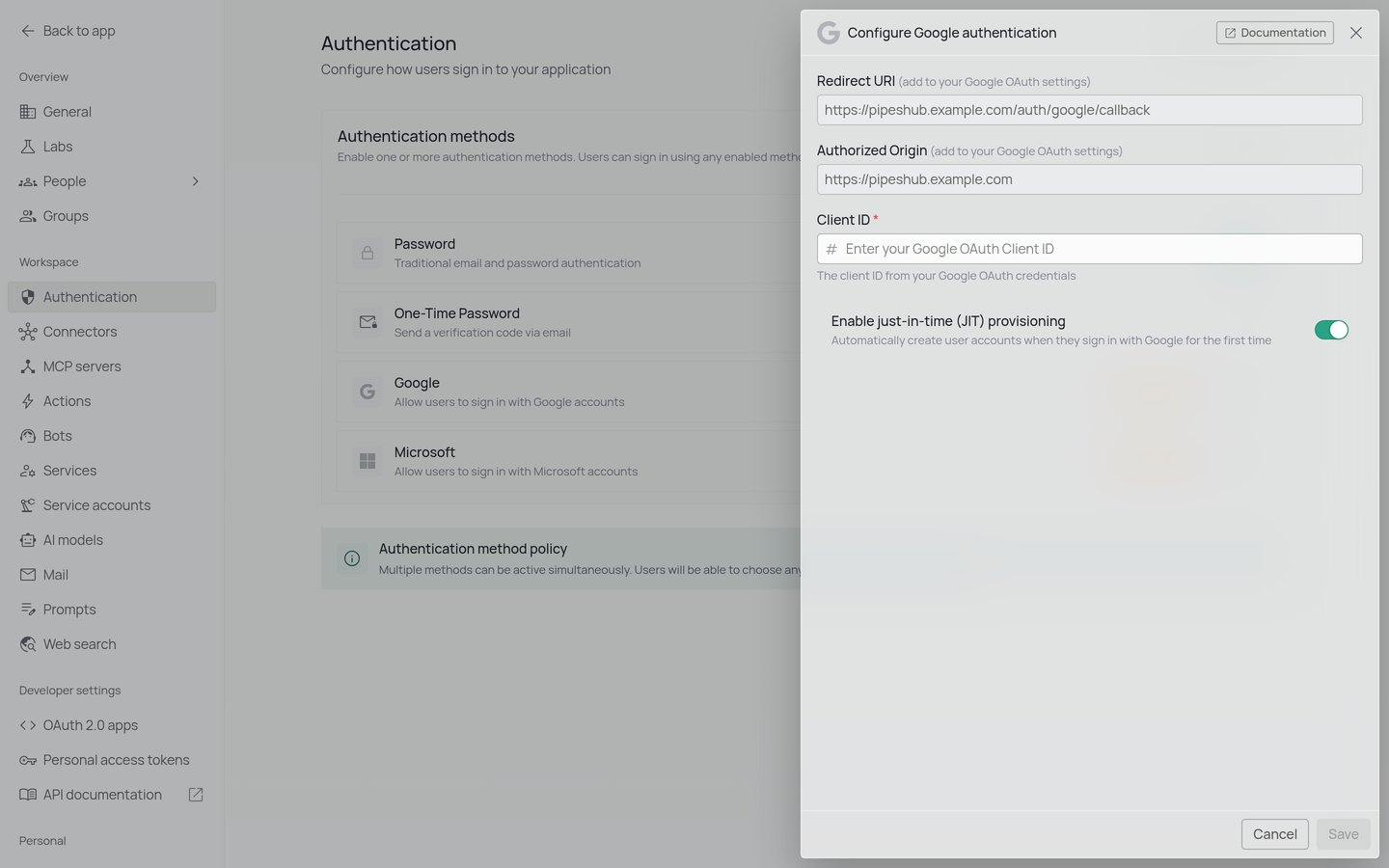
Google authentication
Allow users to sign in with their Google accounts using OAuth 2.0.How it works
- A user clicks Sign in with Google.
- The user is redirected to Google’s sign-in page.
- After signing in, the user is returned to the application.
- Once PipesHub validates the sign-in, access is granted.
Configuration
To enable Google authentication:-
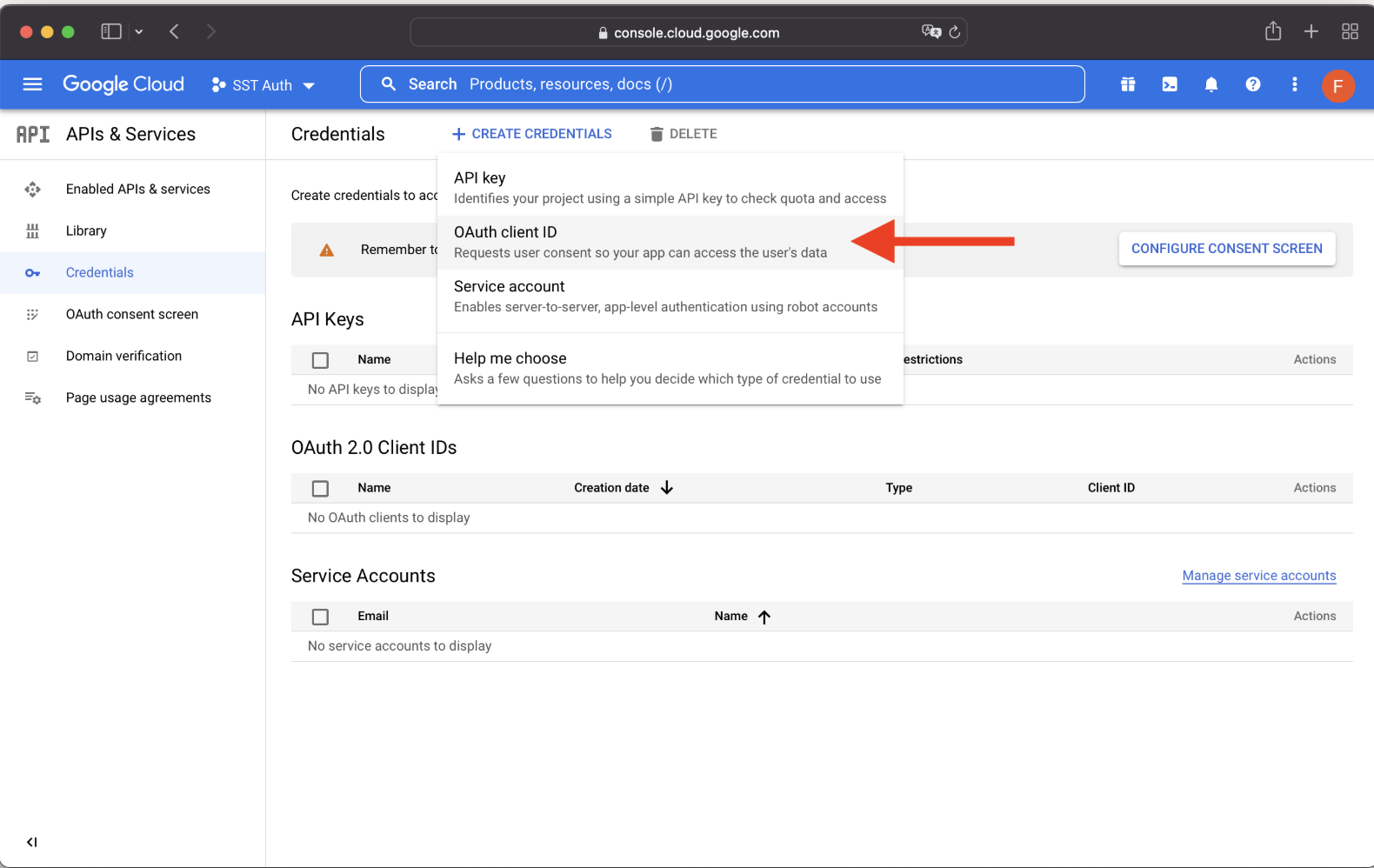
Create OAuth credentials in the Google Cloud Console:
- Create a project (if you don’t have one).
- Configure the OAuth consent screen.
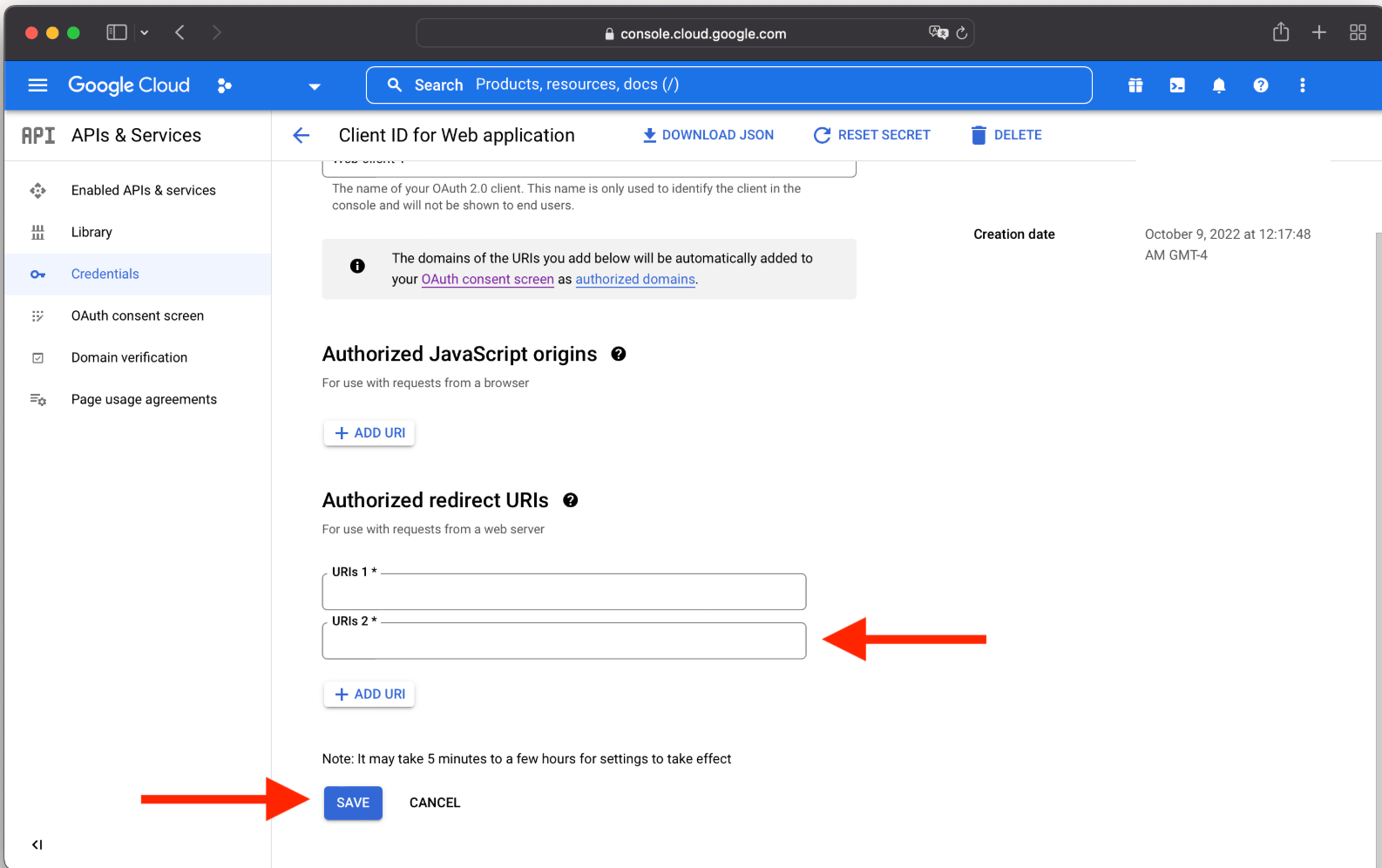
- Create an OAuth client ID (Web application).
- Note your Client ID. PipesHub doesn’t need the client secret.
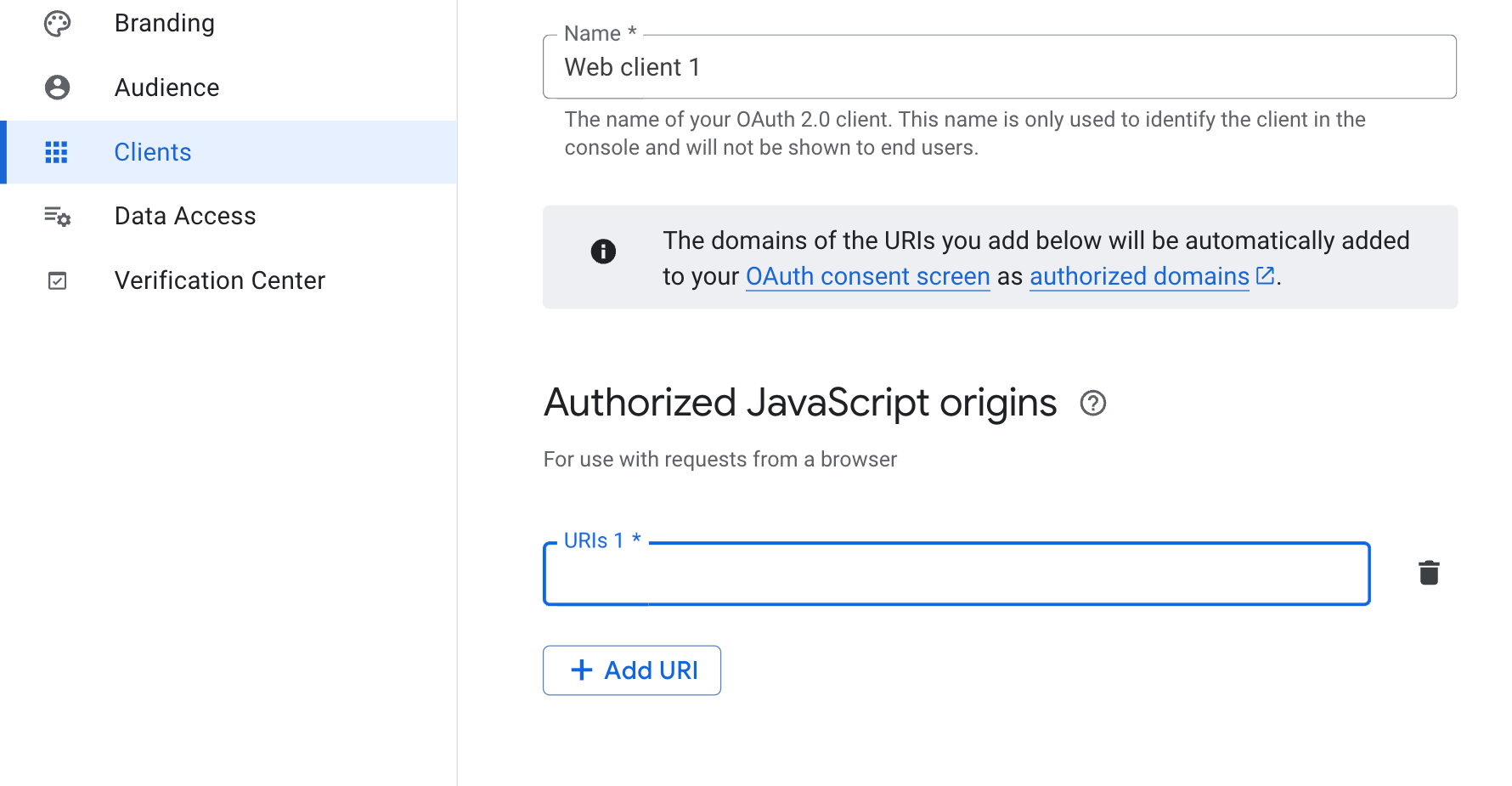
-
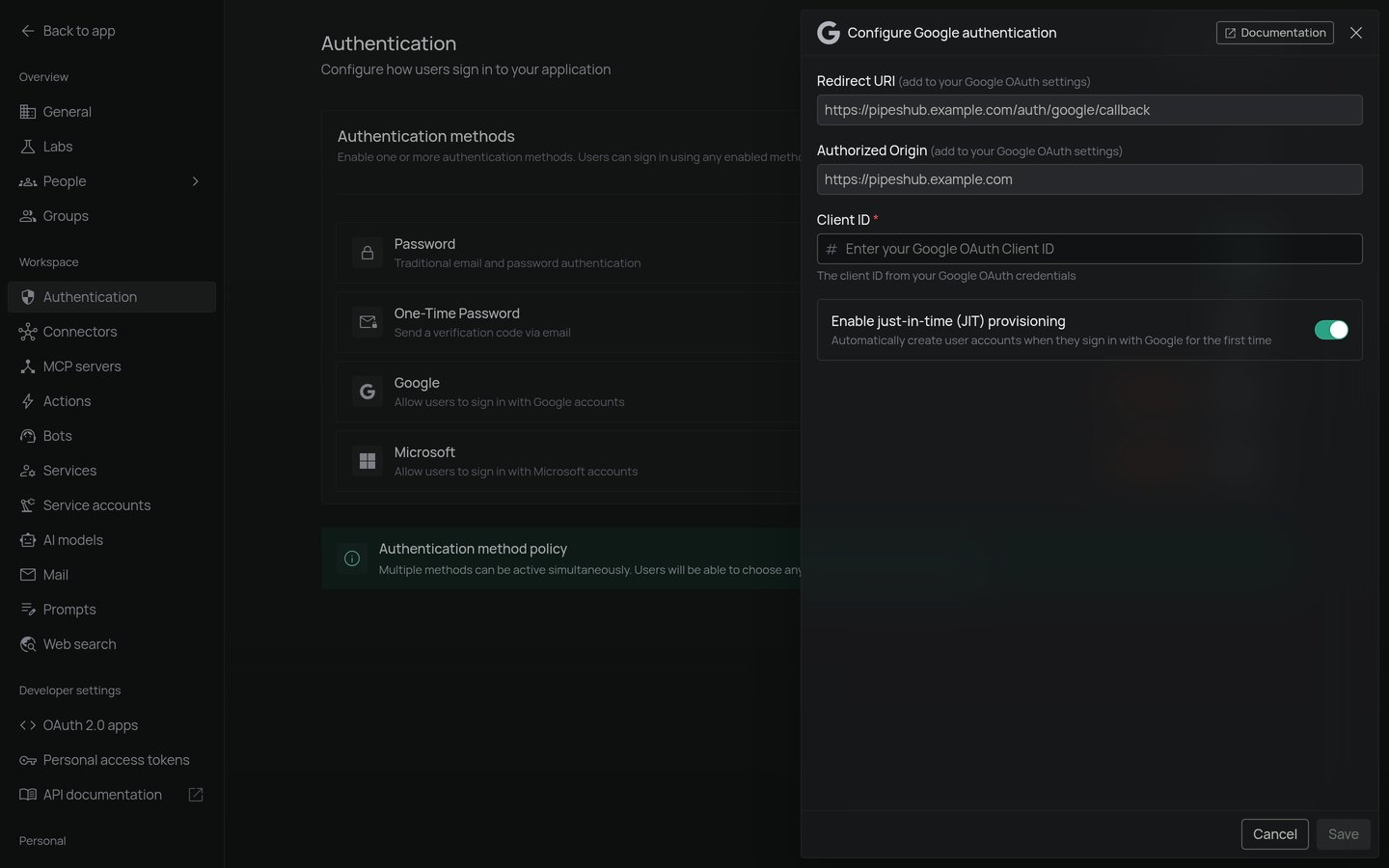
In PipesHub, open Workspace settings > Authentication, click the settings (gear) icon on Google, enter the Client ID and click Save. Then click Edit, turn on Google and click Save. (The toggle stays off until the method is configured.)